Methodology

Six engines.
One system.

How Conversion Forge ships systems instead of retainers. The architecture, the model stack, and the principle behind every deliverable being owned by the client.

Six engines, sequenced.

Each engine is a distinct workflow. Specialisation means each ships fast and breaks less. Failure in one engine does not cascade to the others.
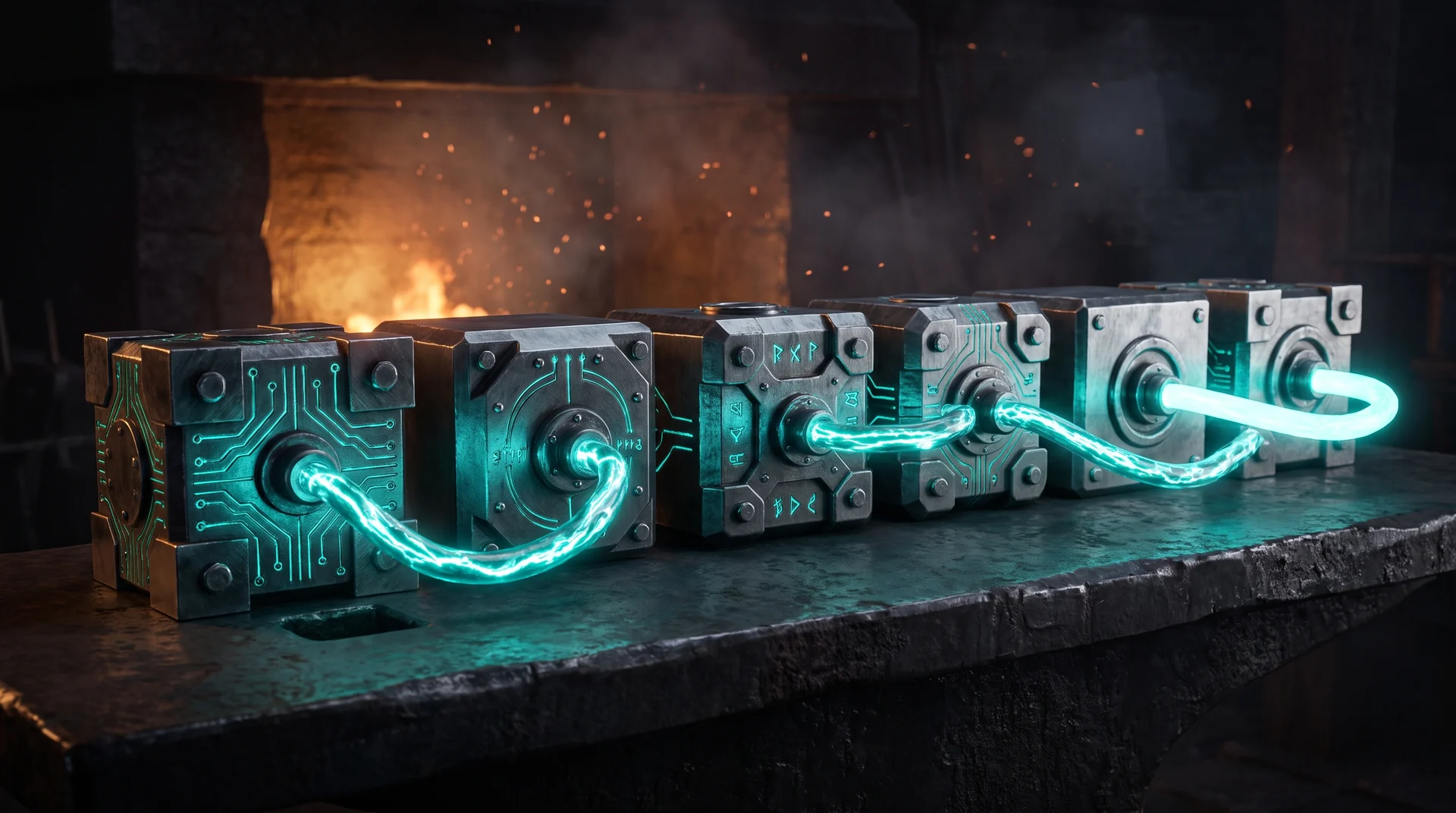
Abstract visualisation of six connected engine modules with teal data streams flowing between them in sequence
Engine 01
Intake and qualification
Onboarding form, discovery call, prospect-fit classification. Sorts in scope from out of scope before money changes hands.
Engine 02
Proposal generation
Three modes (priced-stages, discovery, tier-2 multi-phase). Brand-cohered, dual-emit markdown plus HTML, humanizer-checked.
Engine 04
Lead and revenue rails
Stripe checkout, contact forms, callback widgets, automated outreach. The plumbing that turns visits into revenue.
Engine 05
SEO and AI visibility
Schema markup, llms.txt, structured data. Local pack ranking and citation across ChatGPT, Gemini, Perplexity.
Engine 06
Handover and ownership
Branded PDF recap, OneDrive folder, every credential and source file. The client owns it from day one.


The best mind for the job.
Then a second to check it.

Most of what calls itself AI is a single model doing everything. That is the quick way, and it shows in the work. We do the slower, more deliberate thing. Every part of your project is given to the system best suited to it, and the parts that matter are checked by a separate one that played no part in making them. More passes, more scrutiny, and a result that holds up when it counts.

Several distinct AI model nodes routing and converging into one unified system output
The right intelligence for each task Planning, writing, building and reviewing each call for a different kind of thinking. Every step of your work is matched to the system best suited to it, rather than forced through one tool that is only ever passable at all of them.
A second opinion on everything that matters Important work is checked by a separate, independent system that had no part in making it. One mind can be confidently wrong. Two rarely make the same mistake. By the time the work reaches you, it has already been challenged.
It keeps running when one part fails The method never leans on a single supplier. If one is busy or unavailable, the work carries on and you never see the difference. Your pipeline does not have an off switch.
One standard, every time Whichever part of the system does the work, the bar is the same. You get the considered version, planned, drafted and checked, not the first thing a machine happened to return.

Before you book.

Why does Conversion Forge use six engines instead of one?

Each engine is a distinct workflow with its own LLM model, its own data sources, and its own success criteria. Lead generation runs on a different rhythm than payment integration, which runs differently from SEO. Specialising the engines means each one ships faster and breaks less than a single monolithic system would. Failure in one engine does not cascade to the others.

What powers the systems?

More than one system, and never only one. Different work calls for different strengths, so each task is given to the approach best suited to it, and the parts that matter are checked by a separate, independent one. We are not tied to any single provider, which is also why the work keeps running if one of them has a bad day.

Do clients own what we build?

Yes. Every engagement closes with a handover bundle: source code, content, accounts, and credentials, in a folder the client owns. The agency retains internal operating systems, but the client never has to come back to us to make a change. If we ever stop trading, the client keeps running.

What does the 48-hour build claim actually mean?

It means the core lead-generation system (Google Business Profile, contact form, basic site, first outreach sequence) is configured and live within 48 working hours of the initial discovery call. It does not mean every long-term growth lever is in place. Those layer in over weeks two through six.

How do you measure success?

Platform-verifiable numbers only. Impressions and conversion rates come from Google Search Console, eBay Seller Hub, Instagram Insights, or the client's own analytics. The case study page publishes screenshots, not estimates. If a number cannot be sourced from the platform that generated it, it does not get used.

Why niche-locked to UK small businesses?

Until 30 documented case studies are filed, every engagement is a UK small business. Tradesmen, restaurants, beauty practitioners, eCommerce. Same playbook, same architecture, ten clients deep before broader expansion. Specialisation compounds; spreading does not.

See it in your context.

Book a free 30-minute strategy call. We'll show you exactly which engines your business needs and which ones it does not.

Book Free Strategy Call WhatsApp